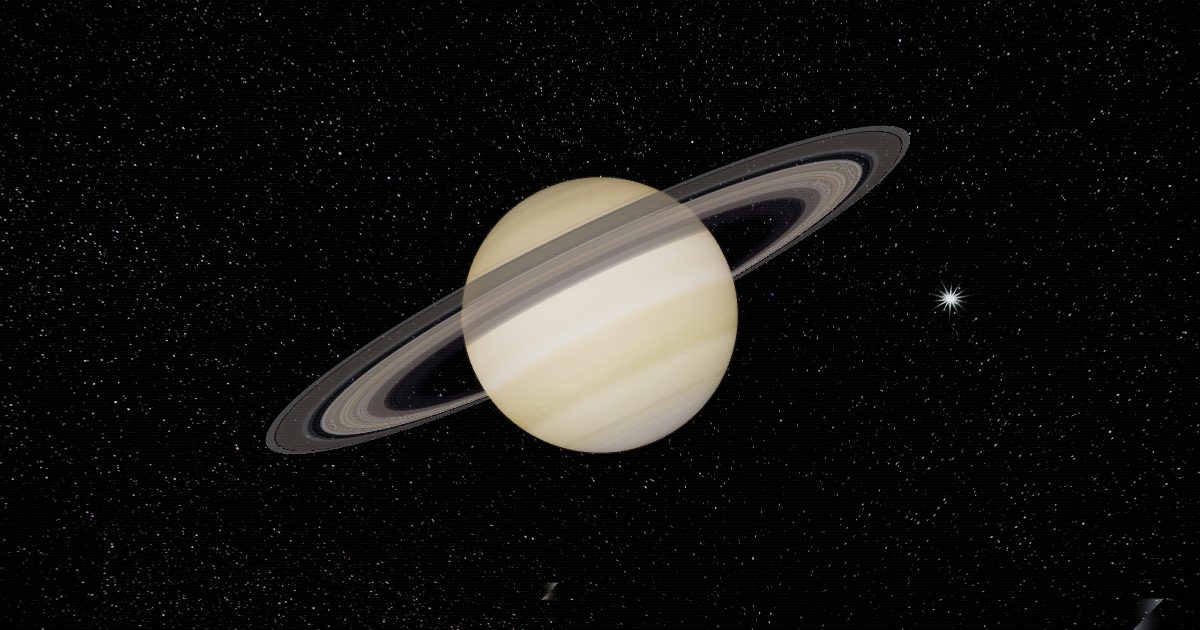
Where are the planets right now?
As of 4 October 2026: Mars is 1.640 AU (245.3 million km) from Earth, Jupiter 5.877 AU (879.2 million km) and Saturn 8.434 AU (1.26 billion km). The table above updates every second, and the 3D simulator shows every planet at its real position for any date.
Is GalaxySim 3D to scale?
Yes. Sizes, distances and orbits are all true to scale, from satellites a few hundred kilometres above Earth to stars light-years away. Because space is so empty, planets look tiny when you see them together; name labels and edge arrows help you find them, and warp flies you to any of them.
Where does the data come from?
Planet, moon and spacecraft positions come from NASA JPL Horizons, the same service NASA mission planners use. The 4,000 asteroids come from the JPL Small-Body Database. Star positions and distances come from published catalogues, and the surface images from NASA, ESA, ESO and Solar System Scope.
How accurate are the planet positions?
Positions are computed from JPL Horizons states and checked against Horizons for the planets and major moons. They are most accurate for dates near today; years away from the reference date, small perturbations that the simplified orbits leave out slowly add up.
What would happen if Earth were 100 times heavier?
Try it in the simulator: pick the Earth × 100 scenario or drag Earth’s mass slider. GalaxySim switches to full N-body gravity, where every body pulls on every other. The Moon, suddenly far too slow for Earth’s stronger pull, falls onto Earth in less than a day of simulated time.
Where is Earth in the Milky Way?
The Sun — and Earth with it — sits about 26,700 light-years from the centre of the Milky Way, in a small spiral arm called the Orion Arm, roughly 67 light-years above the galaxy’s mid-plane.
Is it free? Do I need to download anything?
It is free and runs in any modern browser with WebGL 2 — Chrome, Edge, Firefox or Safari — on a computer, tablet or phone. Nothing to install.
Can I use it for a school project?
Yes. Students use it to see the real scale of the solar system, check where the planets are on a given date, compare planet sizes, and run gravity what-if experiments. Every object page lists the key facts with sources.
What is an orrery?
An orrery is a model of the solar system that shows the planets moving around the Sun. GalaxySim 3D is a digital orrery that also includes the Moon and planetary moons, spacecraft, 4,000 asteroids, nearby stars and the Milky Way.